Let play be the place to try new things.
Play is a space without rules, and lets you create the context to frame the experience. Play is not a game space, as games have rules. You might play a game, but that is not the same as “we’re just playing around.”
Play is special. Play is different. While it has no rules, it is still meaningful and important. When we play we recharge ourselves and those that we’re with.
Play lets us create a place and space where we can set aside our egos, and it can be safe to fail at the things we try. In this time and place the cost of failure is minimal. Play becomes a place to learn as well as have fun.
“Have a play with that” is the phrase that opens up the experience and lowers expectations. We can try things and see what happens. This is a key way to frame the context for learning.
Out of this play we can sometimes innovate new ideas, and experiences too. The humble, ever present post-it was a failed experiment as the inventor used the glue to mark pages in a hymnal in his choir. Or graphene, the miracle composite came about in an after hours play session by the inventors. the list goes on.
Those are examples of purposeful play. Another one is the space for some light play before a brainstorming experience to clear everyone’ head of what they were doing before, and start to focus on what comes next.
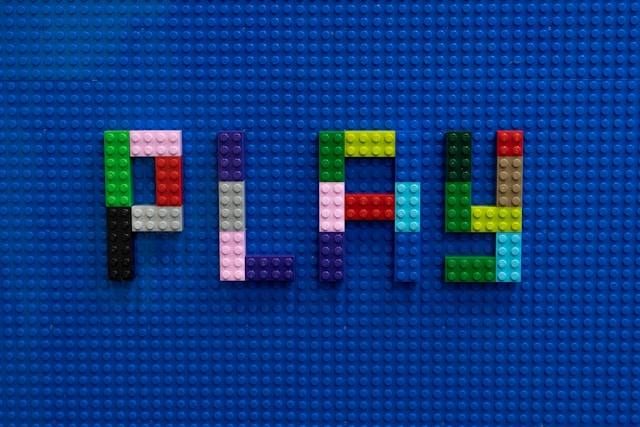
The power of play is often overlooked. We can, should, use it to create spaces for us to learn and recharge ourselves.
Think about this for a moment: the opposite of play is not bored, but depression. If you don’t play enough you burn out. So, along with your regular fruit and veg each day, you should also be playing a bit too. Playing is good for you.
Make your time to play each day
Talk to people at work. Maybe you want to put some games in the break room, or organise something that lets people do a playful session as part of a learning session at work.
There are a range of these that work in the classroom too. A range focus on exercises to practice different coding skills. For example, the Global Day of Code Retreat is an exercise in learning test driven development. For a seasonal work exercise, you can also encourage people to do the annual Advent of Code each day in December. You can also use the code dojos at https://cyber-dojo.org/creator/home too. Other katas can be found in Emily Bache’s GitHub repos too. Any of these are a good place to start and have a go to practice your skills.
You’ll also find more about play in general at the bottom of the post on Lego Serious Play. There you play to learn and explore ideas. The practice is based on solid theory about play and learning.
You don’t have to focus on skill learning. Maybe you just want to do something different. Maybe you want to get out on your bike and see where you go, or let your feet pick a path. You can also just sit and draw, or sketch. Play is what you find fun and a way to switch gears. It’s where you recharge yourself.
Maybe you want to talk to someone about what they do for play?
This post is part of a project pulling together my materials and ideas about Teaching Team Collaboration: the Human-Side of Software Development for software development to students.
If you’d like to be notified of future posts, then please sign up for more using the adjacent form. When you sign up, then I’ll send you a free copy of the collaboration rules as a PDF from the book. You can also follow me on LinkedIn
The ideas above are from my book 101+ Ideas to Improve Team Collaboration, which covers all of these little things that students can do to improve their collaboration. Also available via Kindle.