People don’t always know what you think they know.
I was interviewed by someone for their MSc thesis on team collaboration recently. She reminded me that one of the things that drove me to write Teaching Team Collaboration is that we regularly found students didn’t know how to collaborate in a team.
I know. Right. You get all the way to your final years at uni, and only then does someone tell you ‘how’ to collaborate in a team.
Ok. Some terminology is needed here. I’m differentiating between being part of a team and collaborating as a team. They are distinctly different experiences and I always want people to know how to collaborate as this is more effective than being part of a team. This is true whether you’re building software, writing a report, or putting on an event.
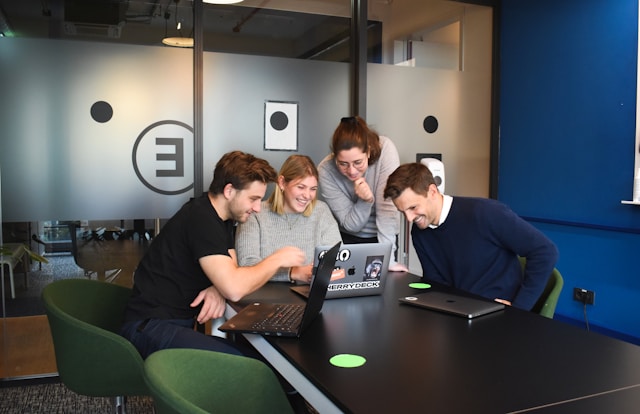
We want students to unlearn independent work in favour of collaborative work. This is a big change for students.
Being in a team means you take part in meetings, and do work for the team. You might do some co-creation as you determine what you’re doing and how you’ll do the work. You contribute to the team goals and outcomes.
Being a collaborator in a team means you do the planning, work and discussions together. You discuss the work as a team and co-create the plans too. You also co-create the work together in pairs or as a mob with everyone working side-by-side. Very little is done as solo work.
Guide people towards collaboration
Teach your people to collaborate instead of being in the team. Give them opportunities to see how the different ways of working feel before they do higher-value work. Run a workshop where they co-create something in pairs, or as a mob.
Tell them why the practices around collaboration work more effectively than they think they might. Tell them about lean and agile, plus the bottlenecks, and motorcades from constraints theory. All of this helps convince them it is a good way to work.
By teaching them this way of working, they will have more fulfilling professional careers. You are not just helping them in this one thing. You are providing them with life skills.
This post is part of a project pulling together my materials and ideas about Teaching Team Collaboration: the Human-Side of Software Development for software development to students.
If you’d like to be notified of future posts, then please sign up for more using the adjacent form. When you sign up, then I’ll send you a free copy of the collaboration rules as a PDF from the book. You can also follow me on LinkedIn
The ideas above are from my book 101+ Ideas to Improve Team Collaboration, which covers all of these little things that students can do to improve their collaboration. Also available via Kindle.